
Why We Dry Coffee Wood Below 14% Moisture Before Packing
Every WINVN Global coffee wood chew is dried until its moisture content drops below 14% before it's packed — the checkpoint that keeps mold and cracking risk both in check.
Two Risks, Two Directions
Moisture content isn't a "lower is always better" number. Too much, and too little, each cause a different problem:
Too High
Wood held in a box or container for weeks — the kind of time a shipment can spend in transit — becomes a much easier environment for mold and mildew to take hold in before it ever reaches a shelf.
Too Low
Especially when a thicker or larger piece is dried too quickly, the outer layer loses moisture and shrinks faster than the core does. That mismatch builds internal stress inside the wood — and it's what eventually shows up as a crack. Larger sizes are more exposed simply because there's more distance between the surface and the core for that gap to open up.
That's why the goal isn't drying wood as much as possible — it's landing in a controlled range. Below 14% is the checkpoint we dry to before anything moves to packing.
How Every Batch Is Dried and Checked
Cut at the Source
Branches and trunks are cut at the source.
Clean and Trim
Raw material is cleaned and trimmed.
Cut to Size
Wood is cut to the required size.
Controlled Drying
Wood is dried under a preset temperature and humidity schedule.
Hand-Finish and Inspect
Pieces are hand-finished and inspected.
Check and Pack
Moisture is checked, and only wood below 14% is vacuum-sealed and packed.
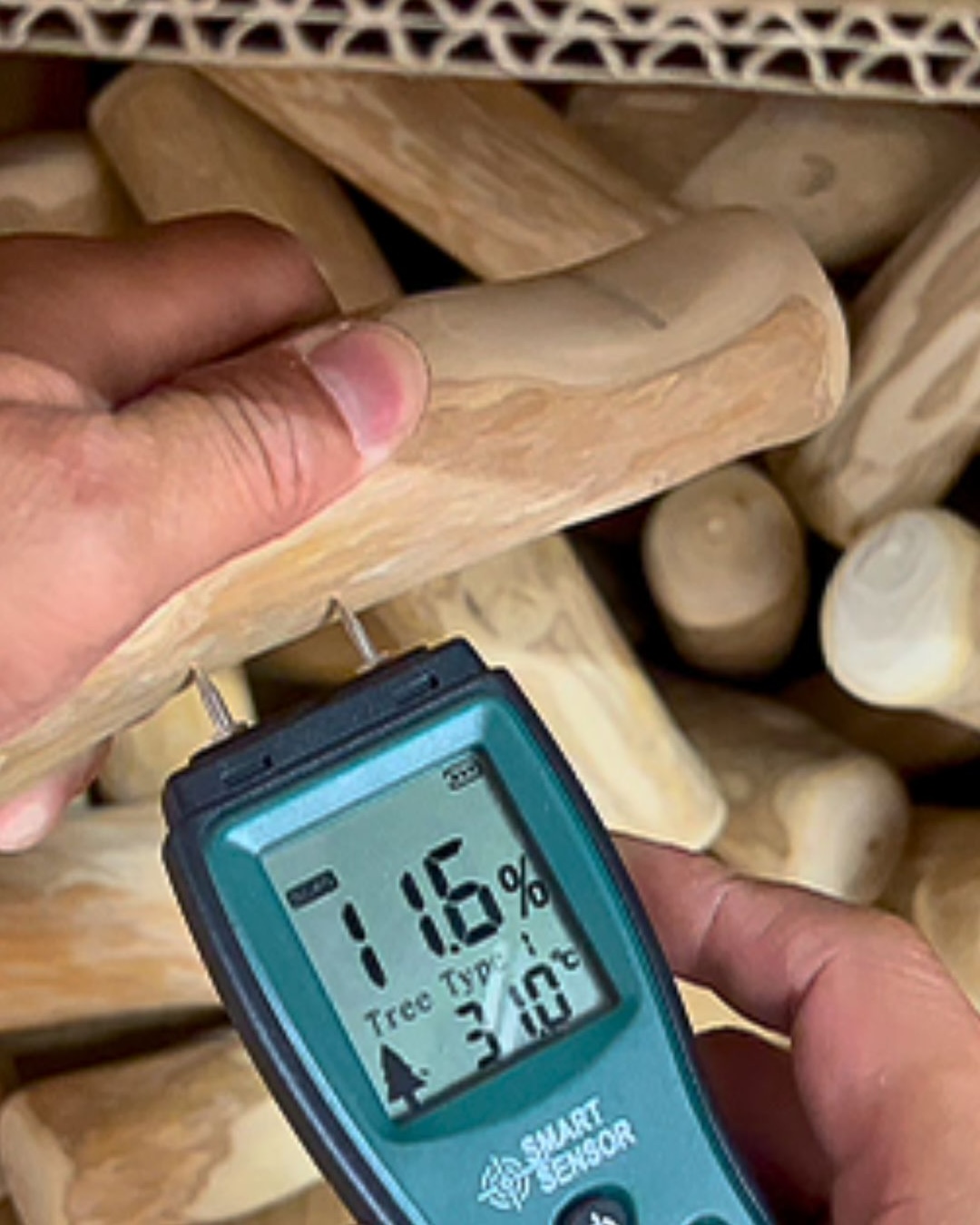
This check happens as part of our standard quality control on every batch, not spot-checked occasionally. Vacuum-sealing at this stage also helps keep that moisture level stable during transit, rather than relying on the drying step alone.
Using Coffee Wood Chew Safely
Drying and moisture control help manage two different risks — they don't make any natural wood product immune to either one. Like any wood chew:
- Supervise your dog for the first 15–20 minutes with any new chew.
- Remove and discard any wood fragments that fall off during chewing.
- Replace the chew once it's worn down to a size that could be swallowed.
- Not recommended to leave unsupervised with heavy/aggressive chewers.
- Store in a dry place — humidity can still affect any natural wood product over time, even after it's left our facility.